
TEAMWORK ISN'T OPTIONAL, IT'S ESSENTIAL
Drilling Fluids | Houston
FLUID SYSTEMS
PRODUCTS
Access detailed technical information for our complete line of high-performance drilling fluid products.
PRODUCTS

SABER CHECK™
Advanced Multi-Blend Bridging Agent
SABER PHALT™
Short description of this product and its key benefits for your operation.

SABER STAR™
Short description of this product and its key benefits for your operation.

SABER CHECK PLUS™
Short description of this product and its key benefits for your operation.

SF-2020™
Short description of this product and its key benefits for your operation.

DISSOLV-SEAL™
Short description of this product and its key benefits for your operation.

FILTERTONE-L™
Short description of this product and its key benefits for your operation.

SABER PLEX™
High Temperature Fluid Loss Control Additive for Non-Aqueous Drilling Fluids

SABER PLUG™
Engineered Multi-Range Loss Circulation Material and Formation Sealing System

SABER POLYSPERSE™
Synthetic Deflocculant and Rheology Control Additive

SABER SEAL OBM™
High-Efficiency Bridging and Plugging Material for Depleted Fracture Zones

SABER SEAL™
Graded Organic Loss Circulation and Torque Reduction Material

SABER THIN™
High-Performance Modified Tannin Rheology Modifier and Deflocculant






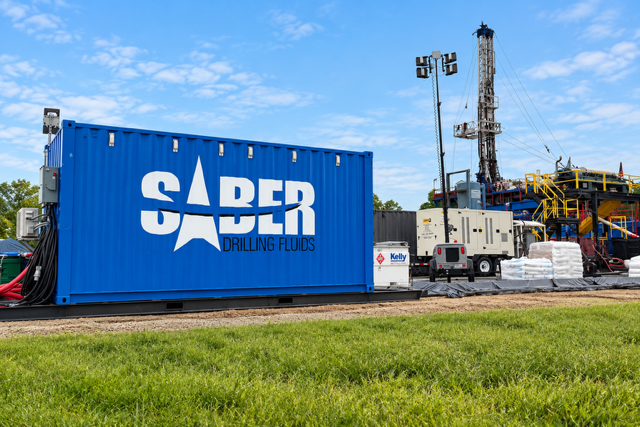
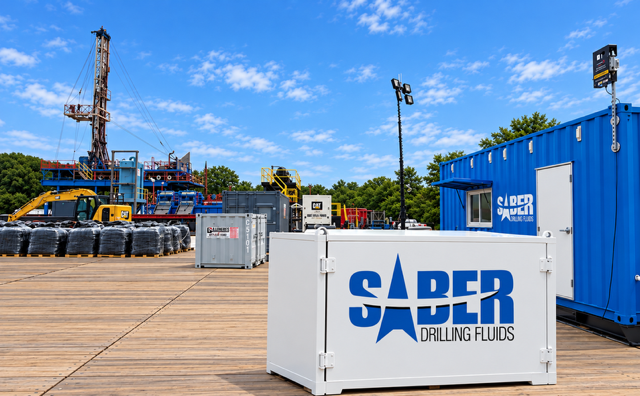
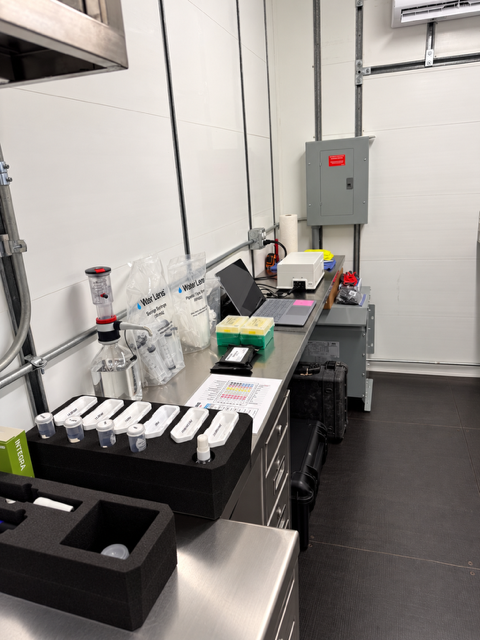








Fluid-System Design
The reservoir drill-in fluid incorporated Saber Drilling Fluids’ proprietary Disolv-Seal® technology as a temporary formation-sealing component. The system was designed to bridge irregular pore throats and vug openings as they were exposed, forming a removable barrier between the circulating fluid and the reservoir.
The design focused on maintaining circulation, limiting whole-fluid and filtrate invasion, supporting effective hole cleaning and manageable hydraulics, reducing dependence on reactive lost-circulation treatments, and preserving hydrocarbon deliverability following cleanup and completion.
Disolv-Seal® was incorporated into the active fluid system to circulate continuously across newly exposed reservoir surfaces. As the fluid contacted porous and vuggy dolomite, the bridging package formed a temporary filter cake across fluid-entry pathways.
The fluid was managed to balance sealing performance, circulation, wellbore condition, and reservoir protection while remaining removable during the planned cleanup and completion sequence.
Field Application and Results
The fluid system was used while drilling the horizontal reservoir intervals of both wells on the pad. Circulation was maintained, and both wells were drilled to their planned total depths.
Maintaining returns allowed drilling to continue through the planned reservoir exposure without curtailing the laterals due to uncontrolled fluid losses. The proactive sealing approach also reduced the operational disruption associated with repeatedly stopping to treat losses.
The field response was consistent with effective temporary bridging of the exposed pore and vug system—based on observed circulation behavior and the ability to continue drilling through the reservoir.
Following drilling, the sealing material was removed during the standard cleanup and completion process, supporting reservoir performance objectives.
The Operating Challenge
The Wakefield-Harrison re-entry combined depth, legacy-wellbore constraints, extended circulation, underreaming, cleanout, and a demanding post-drilling evaluation program. Public operator reporting establishes the following operating envelope: [1,2]
- 21,006 ft MD / 20,949 ft TVD.
- Legacy wellbore originally drilled in 1959 and subsequently deepened.
- More than 4,000 ft evaluated in open hole.
- Logging and sidewall-coring temperatures reported up to 434°F.
- Drilling, underreaming, cleanout, and subsequent open-hole logging and coring.
The 434°F figure should be described precisely: Empire reports it for logging and coring operations, not as a direct measurement of circulating drilling-fluid temperature. [2] Even with that distinction, the well represents an extreme thermal context in which water-based fluid performance must be managed against known HPHT failure modes. Recent technical literature identifies thermal degradation of additives, excessive fluid loss, rheological instability, poor cuttings suspension, and weak filter cakes among the recurring concerns in HPHT WBMs. [6]
The Saber Engineering Strategy
Saber's approach centers on an integrated engineering cycle that connects fluid design, laboratory qualification, field surveillance, and treatment decisions rather than relying on a single additive or laboratory temperature rating.
- Thermal stability – Build the system around the expected temperature and exposure profile, recognizing that chemistry that performs at surface conditions may change materially after prolonged high-temperature aging.
- Filtration control – Protect HTHP fluid-loss performance and filter-cake quality as temperature, contamination, and solids loading increase.
- Rheology and hole cleaning – Maintain enough low-end rheology and carrying capacity to transport cuttings while avoiding excessive viscosity, progressive gelation, or an unfavorable hydraulic profile.
- Solids management – Treat drilled solids as an engineering variable. Underreaming and cleanout can materially change rheology and treatment demand.
- Chemical compatibility – Evaluate the formulation as a system rather than as isolated products; temperature, salinity, solids, and exposure time can change additive interactions.
- Field adaptability – Use trend-based monitoring to adjust concentration, treatment timing, and operating targets as actual well conditions evolve.
API RP 13B-1 provides standardized procedures for field testing key water-based drilling-fluid properties. [8]
Laboratory Qualification + Field Execution
Laboratory qualification establishes whether a proposed fluid chemistry is technically viable under the anticipated thermal and contamination envelope. Field engineering determines whether that system remains within operating targets after circulation, solids loading, dilution, contamination, and repeated treatment. Those two functions should be treated as one engineering loop, not as seperate services.
For an ultra-deep re-entry, the surveillance program should focus on the variables that most directly affect wellbore condition and hydraulic performance:
- HTHP / static filtration
- Rheological trends & gel development
- Solids loading & chemical concentration
- Treatment response
- Hole-cleaning requirements
- Hydraulic margin
This data-driven loop allows the treatment strategy to evolve with actual well conditions rather than relying solely on predetermined product concentrations.
Field Application and Results
The fluid system was used while drilling to 21,006 ft MD / 20,949 ft TVD. The well was underreamed and cleaned out, and both wells were drilled to their planned total depths.
Maintaining returns allowed drilling to continue through the planned reservoir exposure without curtailing the laterals due to uncontrolled fluid losses. The proactive sealing approach also reduced the operational disruption associated with repeatedly stopping to treat losses.
The field response was consistent with effective temporary bridging of the exposed pore and vug system—based on observed circulation behavior and the ability to continue drilling through the reservoir.
Following drilling, the sealing material was removed during the standard cleanup and completion process, supporting reservoir performance objectives.